
"We need to transform our design using configuration approach. Could you refine the design with minimized cost?"
Toyota Motors North America
Project Overview
Toyota Motors North America (TMNA) partnered with IBM to modernize its vehicle configuration platforms, which support the capture, fulfillment, and administration of vehicle orders across multiple internal systems. The challenge was to refine and evolve existing configuration workflows (not redesign from scratch) while minimizing operational cost, reducing friction, and supporting Toyota’s growing vehicle offerings.
This project required deep platform thinking, close collaboration across large teams, and UX decisions grounded in real operational constraints.
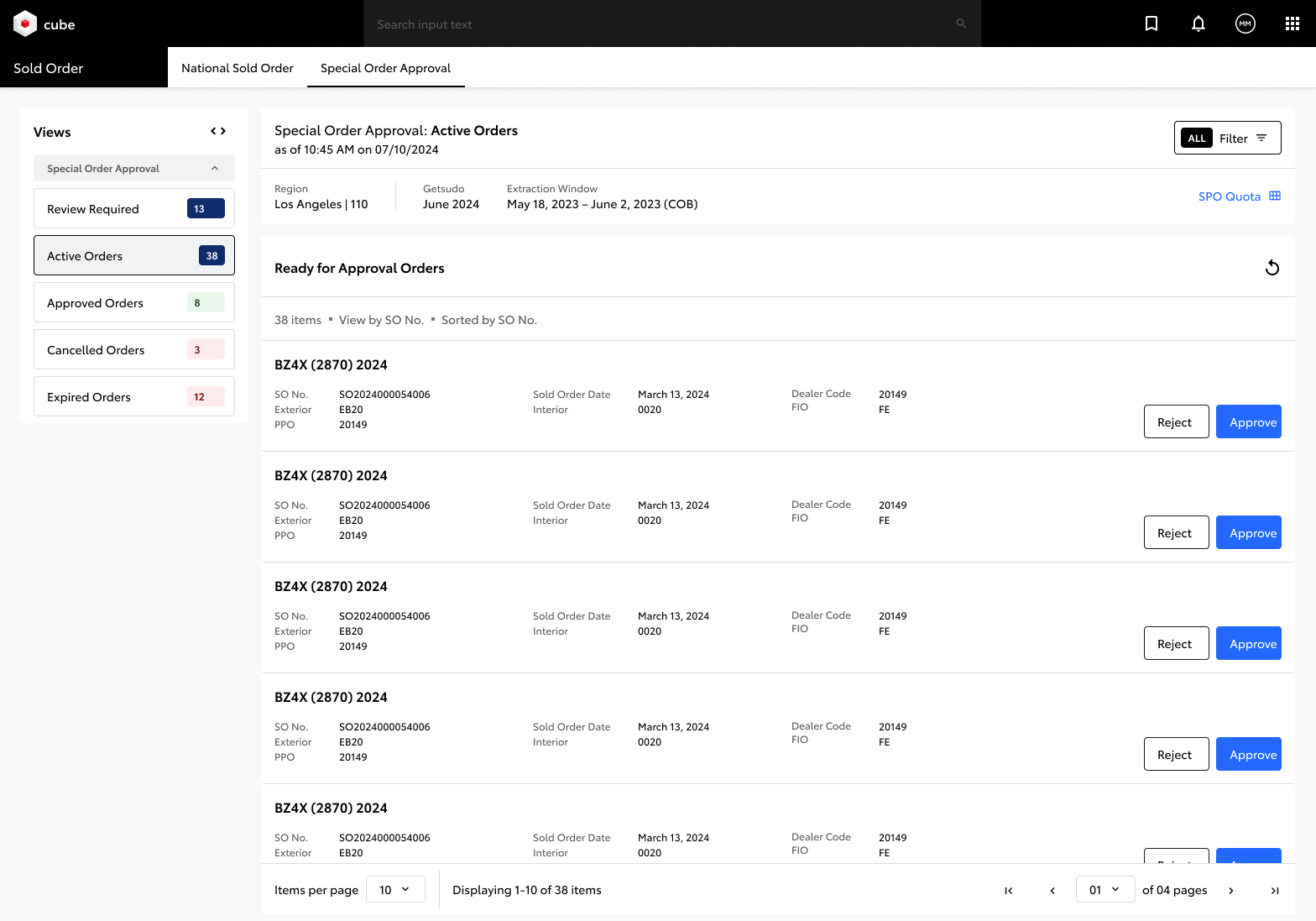
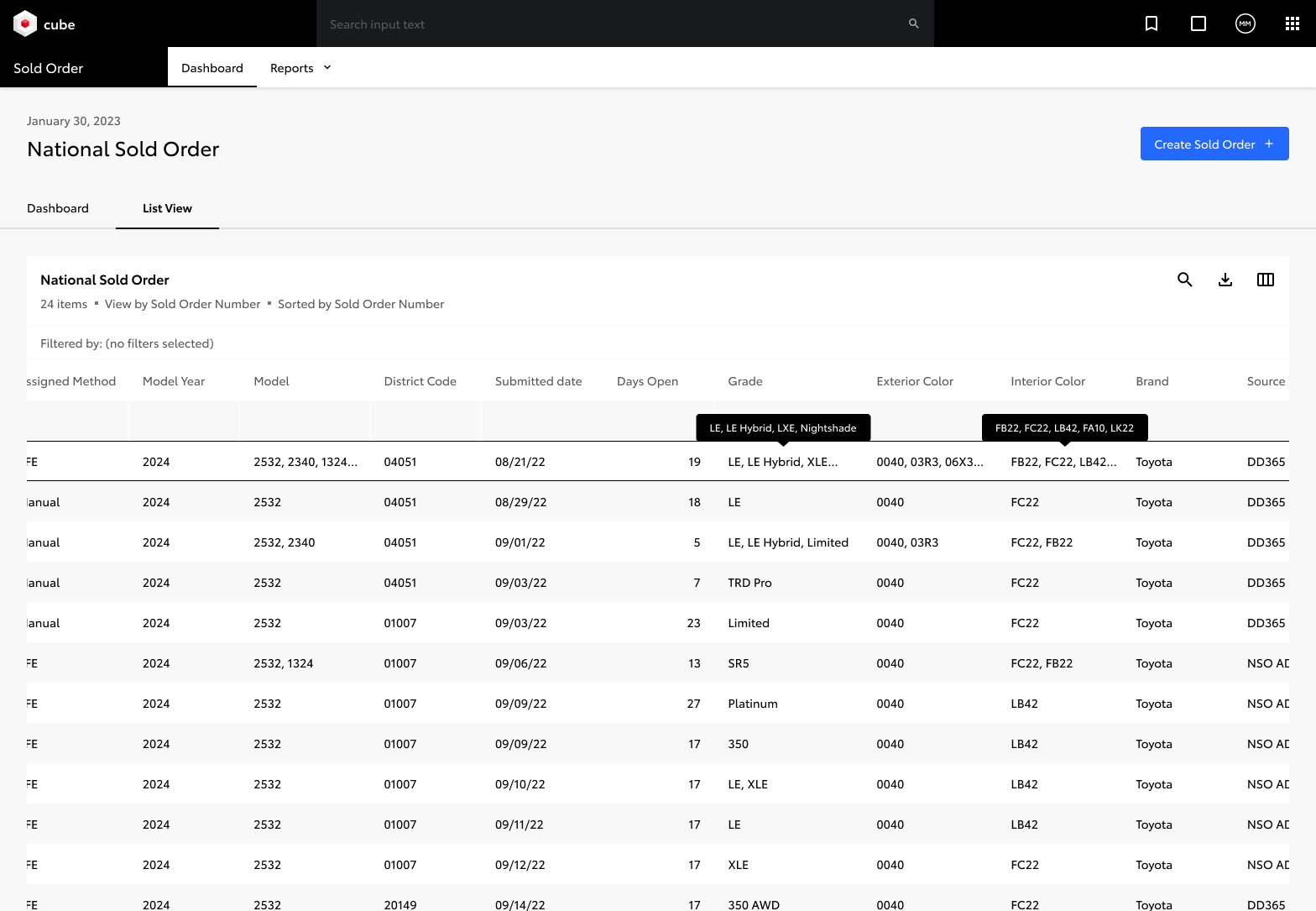
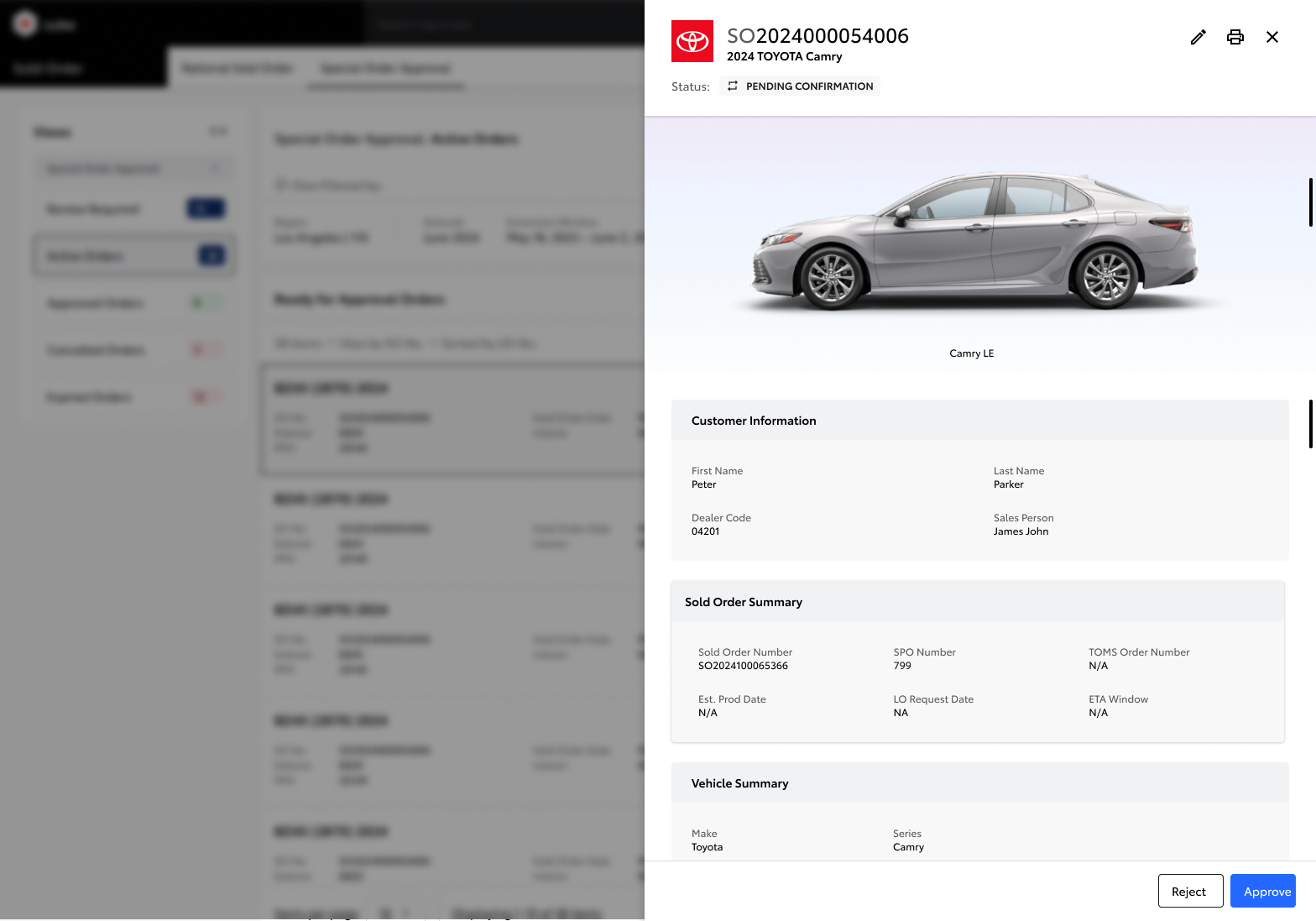
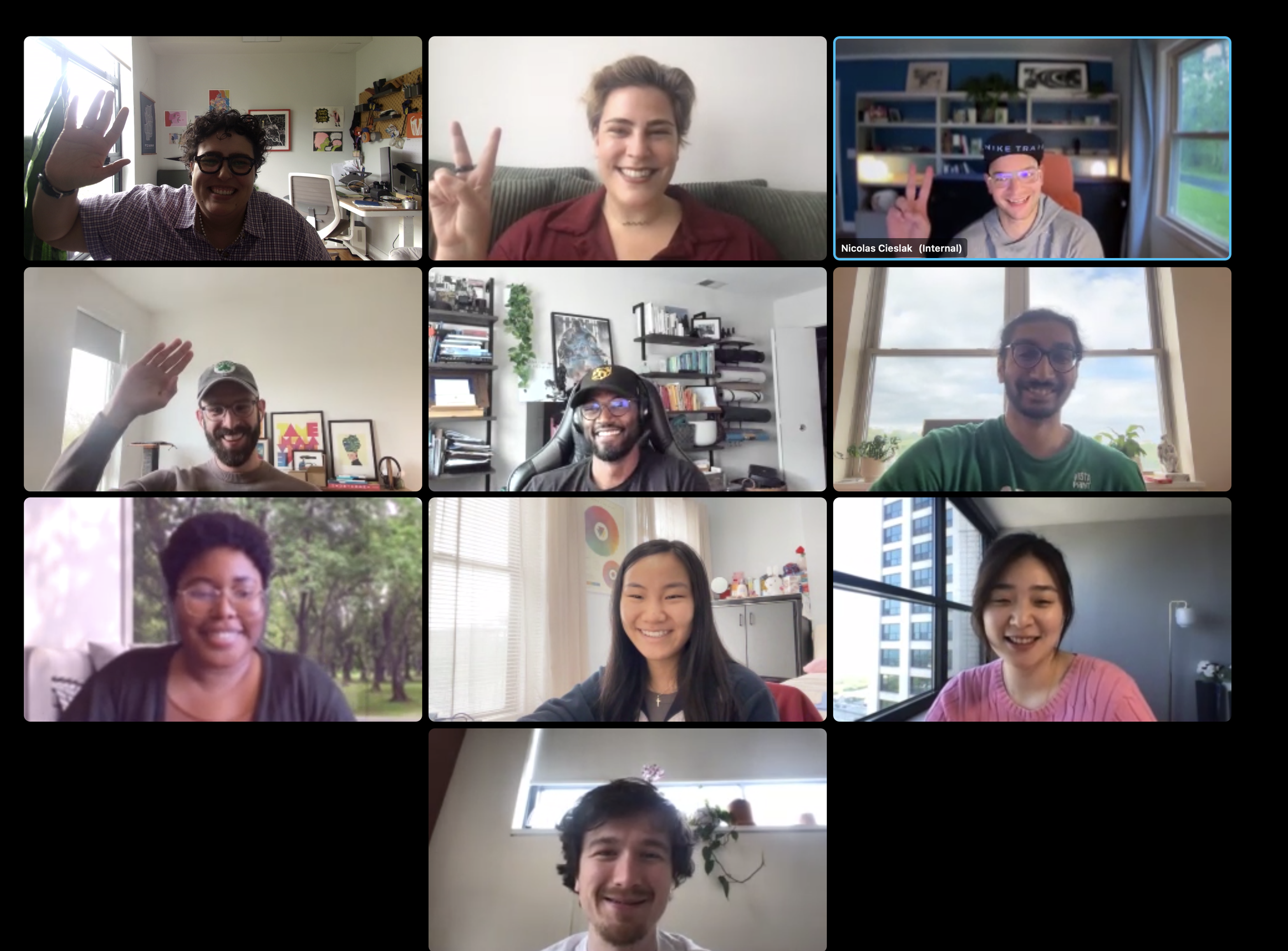
As a senior UX designer, I joined a large, distributed design team (7+ designers), each responsible for different core platforms within TMNA ecosystem.
Leading UX design for National Sold Order (NSO) and Smart Fulfillment Engine (SFE)
Collaborating closely with product, engineering, and business stakeholders
Refining existing workflows
Designing high-fidelity solutions aligned with technical and operational constraints
About the Client
TMNA oversees vehicle manufacturing, sales, and distribution across the U.S. and Canada. As one of the largest automotive manufacturers globally, TMNA operates complex internal systems to manage vehicle configuration, ordering, and fulfillment at scale.
IBM supported TMNA by helping modernize internal tools, called TMNA Cube, used by dealers, operations teams, and internal stakeholders to improve visibility and efficiency.
The Challenge
TMNA’s configuration platforms had grown over time to support new vehicle options, markets, and business rules. While powerful, these systems had become increasingly difficult to use and maintain.
Key challenges included:
Multiple legacy platforms with inconsistent UX patterns
The need to improve usability without disrupting existing workflows
Pressure to deliver improvements while minimizing development and operational cost
The goal was to evolve the system, not reinvent it.
My Role
Design Approach
Evolving, Not Replacing, Existing Systems
Given the scale and risk involved, the design approach focused on incremental improvement rather than full replacement.
Preserving familiar workflows while reducing friction
Clarifying complex rules through better information hierarchy
Reusing and refining existing patterns to minimize engineering overhead
Designing for Scale and Accuracy
Configuration errors can have significant downstream impact. I focused on:
Structuring dense data into readable, task-oriented layouts
Designing interactions that reduce cognitive load and error risk
Supporting edge cases without overwhelming primary workflows
Ensuring designs aligned with real-world operational processes
Outcome
Cross-Functional Collaboration at Scale
Working within a large, cross-functional team required strong coordination and communication.
Regular meeting with stakeholders to get approval for UX decisions
Regular meeting with product managers to align UX decisions with business priorities
Real-time design meeting with engineers to ensure feasibility across legacy and modern systems
Weekly cross-team design review sessions to align direction, share learnings, and maintain cohesion across the broader program
The refined UX designs improved usability across TMNA’s configuration platforms while respecting operational and technical constraints.
Reduced friction in high-frequency operational tasks
Improved consistency across related platforms
A scalable UX foundation to support future vehicle programs and enhancements